Special operations elements of the British Army and Royal Marines are getting a new rifle - the KS-1.
An order for 1,640 Knight's Stoner 1 (KS-1) rifles, designated the L403A1 in UK service, has been placed, with an option to acquire a further 10,000 falling under a new £90m contract over the next decade.
We did a question and answer session with Jack Leuba, director of sales at Knight’s Armament Company, to find out more.
The British Army and the Royal Marines will be using the L403A1/KS-1 rifle - what are the advantages of using this type of weapon? What are its key features?
Mr Leuba: The adoption of an AR-based rifle was intentionally driven by programme requirements, and while I am not able to speak for the user groups or the MOD, I can say that the decision is readily supported with substantial evidence.
The most immediate and useful feature of the L403A1 is the ability to use the rifle with either the right or left side of the body, allowing both left- and right-hand/eye-dominant users to interact with the rifle identically.
This grants every user the ability to use not only their optimal side, but also enables the use of the opposite side in the event of injury or to gain tactical advantage in specific circumstances.
The controls of the KS-1 have been refined over decades of use and experience, carefully designed to ensure rapid access while minimising the probability of inadvertent manipulation or creating a snag-hazard.
The handguard/forend is relatively long, covering nearly the entire length of the 348mm (13.7in) barrel.
Not only does this protect the barrel from damage and the user from touching a hot barrel, it also serves to allow mounting of various enablers such as torches and laser aiming devices without compromising the user’s grip position on the handguard.
Further, a free-floating handguard permits a firer to support the handguard on a solid object without disturbing the barrel, which directly contributes to increased individual accuracy.

The Accessories
Mr Leuba: M-Lok negative space mounting slots can be used to attach accessories and grip-enhancing covers while also allowing airflow to cool the barrel, and reduce overall weight when compared to other attachment methods.
The URX6 handguard is exceptionally rigid and resists impact shift, retaining handguard-mounted laser POI in combat conditions.
The Trigger
Mr Leuba: A combat-durable match-grade, two-stage trigger comes standard in the KS-1. The reduced weight and crisp break of the trigger immediately benefits new or experienced shooters by enabling precise trigger control, improving individual accuracy and proficiency.
The feel, durability and safety of the L403A1 trigger has been honed through decades of experience with two-stage triggers in both precision rifle systems and individual carbines in military service around the world. Each trigger is meticulously machined, assembled, and verified to meet correct pull weight and safety requirements.
The Suppressor
The 556 QDC/MCQ-PRT (Quick Disconnect Coupling/Mini Close Quarters-Pressure Reduction Technology) suppressor is a useful addition to the base system.
Its small size allows a relatively long barrel to be used on the system while staying inside the length requirements of the rifle, which increases muzzle velocity compared to shorter barrels with longer suppressors.
The 556 MCQ suppressor reduces the firing sound level by 12dB, permitting unrestricted noise exposure when wearing single-level hearing protection, and significantly reduces the ability of an opposing force to precisely locate the position of the firer when at common combat distances.
Suppressors in general, and especially small suppressors, tend to show significant first-round flash.
The 5.56 MCQ was specifically designed to reduce firing signature, directly contributing to survivability of the user in low-light combat conditions.
The integrated Pressure Reduction Technology design of the suppressor drastically reduces the negative effects of suppressor use on a rifle, from user exposure of toxic gas resulting from the combustion of gunpowder to the reduction in reliability due to increased fouling and increased cyclic rate from the blowback effect of a pressurised bore following firing.
The QDC mounting system returns the suppressor to the same position following removal and reinstallation, and is resistant to both carbon-lock and self-loosening over extended use.
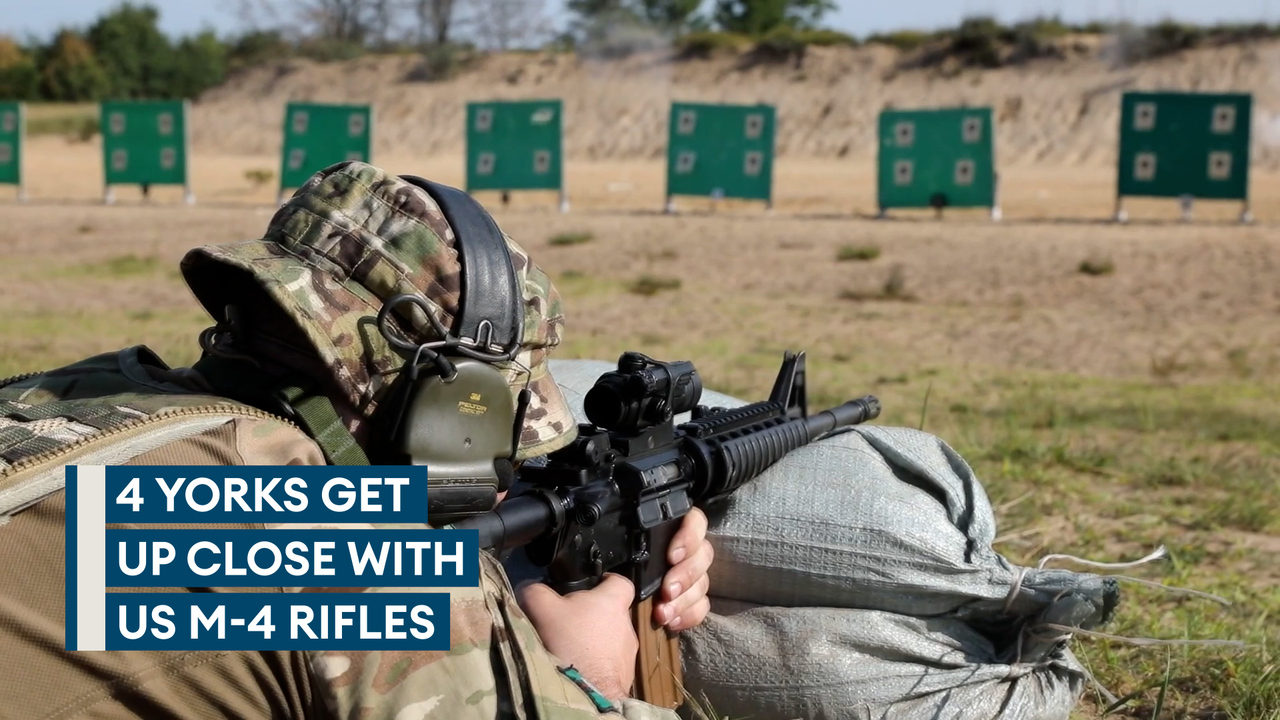
What makes this rifle better than the rest?
Mr Leuba: All of the above features, while significant and useful, are not unique to the KS-1.
What sets the KS-1 apart is the heart of the system: the cold hammer-forged dimpled barrel with KAC’s Mod 2 gas system and E3.2 bolt.
The heavy-profile barrel will endure extended high-density firing schedules without significant shift of point of impact, and is ball-mill dimpled with KAC’s patented process for weight reduction.
The Mod 2 gas system precisely controls the operating gas pressure, and maintains that optimal pressure through the life of the barrel.
With dual ejectors for increased reliability, a high-strength extraction mechanism, improved cam pin hole diameter and advanced lug pattern design, the E3.2 bolt is unequalled for functionality and durability. In testing, the KS-1's E3.2 bolt has endured over 50,000 rounds of use without breakage.
While all manmade things will eventually break given a sufficient level of abuse, the E3.2 bolt will confidently provide tens of thousands of rounds of use when maintained properly.
The KS-1 is undoubtedly the most advanced and feature-rich M4-type rifle that Knight’s Armament Company has ever produced, and it was done specifically to meet the requirements of the UK MOD.
We are honoured to have been selected to provide this capability to these specialised forces of the United Kingdom.
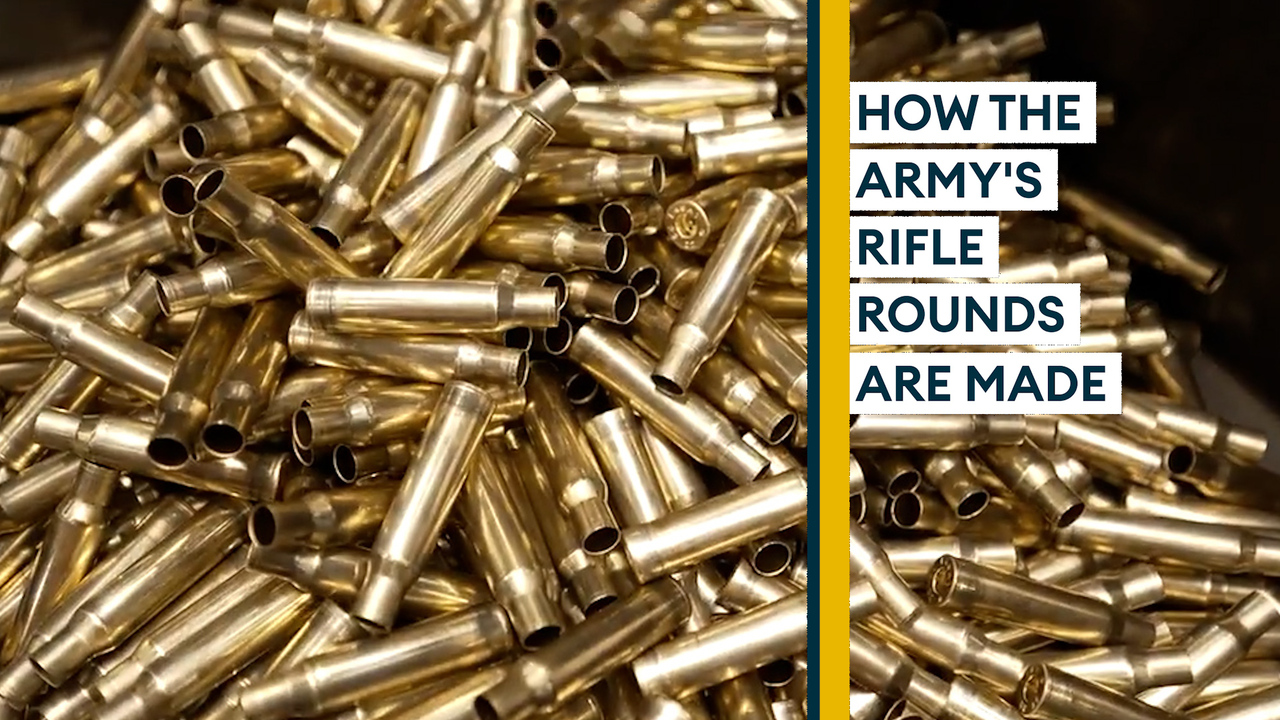
Why are the suppressors so important?
Mr Leuba: The obvious answer of "they make the gunshot quieter" is not the whole story.
Naturally, reducing the sound level of firing has its own advantages, from enhancing communication within an element engaged in direct combat to reducing the ability of an enemy force to locate the positions of individuals within the engaged unit.
With traditional suppressors, these benefits came with added consequences: rifles become fouled faster, cyclic rates increased due to retained bore pressure (causing reliability degradation) and users were exposed to significantly more toxic gasses than when unsuppressed.
Knowing these risks, the UK MOD specifically required the suppressors to perform better in all of those aspects to be considered for use.
This forward-thinking by the programme managers and users ensured that whatever system was adopted would not be hindered by "legacy" design concepts that were primarily focused on sound reduction.
While reducing the sound pressure level of the gunshot is clearly desired, professional users soon realised that sound alone should not be the focus, but flash as well. Design features within the 556 QDC/MCQ-PRT suppressor directly address flash, helping users from becoming obvious targets to those seeking to locate them.
The deeper part of this question beyond "why are suppressors important?" is: "What suppressor will meet these requirements?"
When it comes to reducing firer signature, a suppressor is the immediate answer. They have been employed by specialists for decades in their professional duties, from precision marksmen to CQB specialists, forced to accommodate for the drawbacks of their use.
One often overlooked aspect of suppressor use is suppressor durability, especially in a combat role where the suppressor may be exposed to not only high-density fire, but potentially high-density fully automatic fire.
As suppressed rifles are fired, they must contain and control the blast and pressure of the firing event, causing them to rapidly heat to internal temperatures exceeding 650°C.
At these temperatures common steel will have significantly reduced strength, leading to catastrophic failure of the suppressor as firing continues.
KAC's current generation of suppressors are constructed with metals that retain strength at elevated temperatures and are designed specifically to manage the heat as it grows and conducts through the suppressor body.
The 556 QDC/MCQ-PRT endured nearly 450 rounds of continuous cyclic-rate full-auto fire with a belt-fed machinegun before failure in testing, significantly exceeding even heavy-duty full-auto-rated traditional suppressors.
The selection of the 556 MCQ suppressor in conjunction with the KS-1 rifle is a significant advantage to users in the most dangerous situations and in the preparation for those situations.
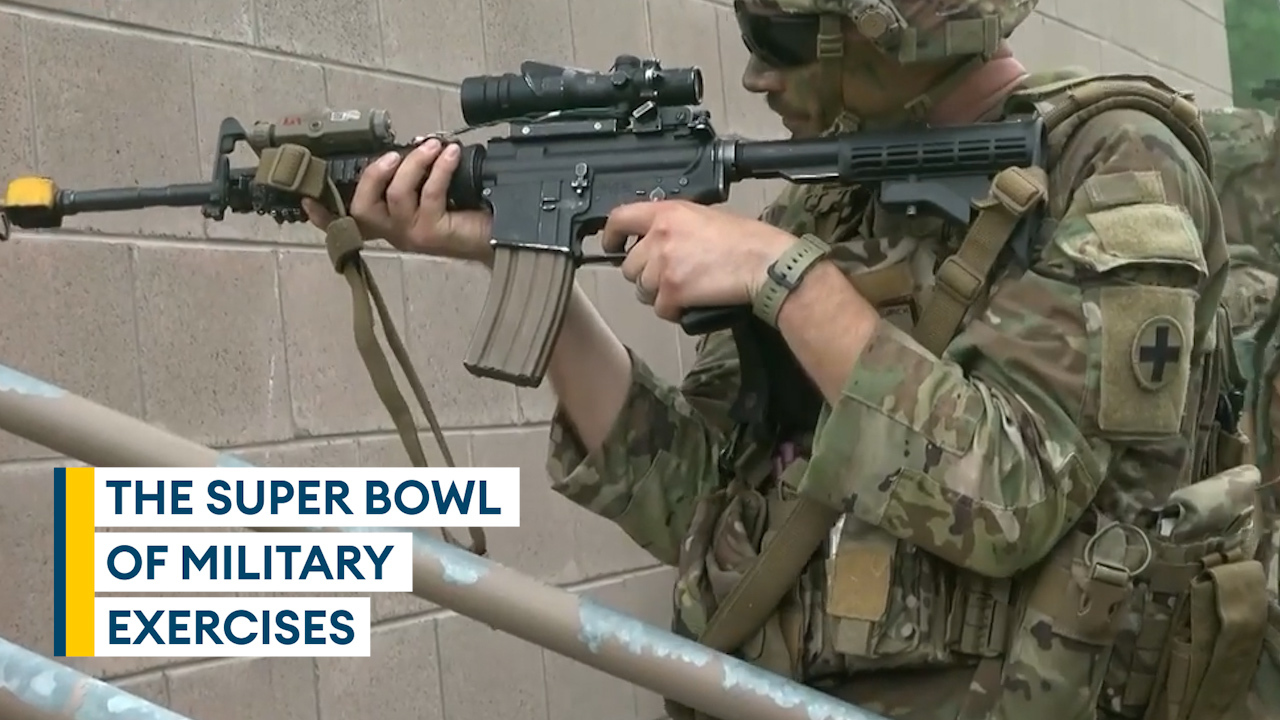
What other forces use this type of weapon - and how easy is it to integrate partner training with this weapon?
Mr Leuba: M16 derivatives and descendants are used heavily through partner forces around the globe, with tactics, techniques and procedures evolved around them.
Adopting the KS-1 will allow UK forces to integrate seamlessly with those using similar (if not identical) systems. The L403A1 shares many common parts with most M4-type rifles, permitting parts-sharing in extreme situations if needed.
Following the creation of the KS-1, several friendly nations have begun programmes similar to the UK programme which led to the adoption of the KS-1, which will lead to an increasing number of these (and similar) systems throughout partner and host forces.
They could be integrated into the UK military over the next decade - how do they stay relevant?
Mr Leuba: Knight's Armament Company lives by the motto 'Nothing is ever ‘good enough'. We continually test, evaluate and refine our product lines, constantly seeking performance gaps and fixing them.
While we would not change a fielded system, we do make our customers aware of advancements as we develop them and prove them to be viable.
This mentality of constant improvement is not focused only on our existing product lines, but emerging technology as well. Advancements in ammunition, simulation software, manufacturing techniques and evolving customer needs constantly reveal opportunities for product improvement and new product lines.
Everyone involved in this endeavour is seeking nothing less than the finest equipment for the end user, for as long as the programme continues.
Knight's Stoner 1: British troops getting new assault rifle

British special operations soldiers will soon be more lethal on the battlefield thanks to a £90m contract to deliver a new modern, high-precision rifle.
The Knight's Stoner 1 (KS-1), designated L403A1, boasts a muzzle signature reduction system, an improved optical sighting system and crucially can be more easily shot from the left shoulder than the current L85 assault rifle.
The rifle is already in service with the Royal Marines and was tested on exercise in Norway earlier this year.
Procured by Defence Equipment & Support (DE&S) under the Army's Project Hunter, the Alternative Individual Weapon (AIW) uses a magnified optic so the user is able to engage threats from greater distances, while the signature reduction system works to mask the AIW from detection by sight and sound.
The L403A1 will supplement the current rifle being used by soldiers and marines, the L85A3.
The AIW system is being delivered by Macclesfield-based company Edgar Brothers but is manufactured by Knight's Armament Company based in the US.
Jack Leuba, director of sales at Knight's Armament Company, told Forces News: "The most immediate and useful feature of the L403A1 is the ability to use the rifle with either the right or left side of the body, allowing both left- and right-hand/eye-dominant users to interact with the rifle identically.
"This grants every user the ability to use not only their optimal side, but also enables the use of the opposite side in the event of injury or to gain tactical advantage in specific circumstances.
"The controls of the KS-1 have been refined over decades of use and experience, carefully designed to ensure rapid access while minimizing the probability of inadvertent manipulation or creating a snag hazard."

The rifle's dimpled barrel is cold hammer-forged, making it extremely strong, while its suppressor can handle extremely high temperatures, Mr Leuba said.
He explained how the handguard covers nearly the entire length of the 348mm (13.7in) barrel, providing two functions.
He said: "Not only does this protect the barrel from damage and the user from touching a hot barrel, it also serves to allow mounting of various enablers such as torches and laser aiming devices without compromising the user’s grip position on the handguard.
"Further, a free-floating handguard permits a firer to support the handguard on a solid object without disturbing the barrel, which directly contributes to increased individual accuracy."
Mr Leuba said the KS-1 shares many common parts with most M4-type rifles, "permitting parts-sharing in extreme situations if needed".

The Ranger Regiment, as a key component of the Army Special Operations Brigade (ASOB), will receive the AIW later this year.
Lieutenant-Colonel Gareth Davies, one of the people involved in the procurement programme, said: "Project Hunter has successfully delivered a new weapon option for UK Defence.
"At the current time this is being procured for the Army Special Operations Brigade (ASOB).
"It offers a marked increase in lethality, and the system includes one of most capable day sights currently available.
"Importantly the weapon system will be further enhanced by our newest generation of night optics, with which the ASOB are already equipped."
The L403A1 is a high-performing modern development of the ArmaLite Rifle (AR). As an AR-type platform, it shares much in common with the rifle systems used by many of the UK's allies.
An initial £15m order for 1,620 AIWs has been placed by the Army, with options to procure up to 10,000 more, totalling £90m, under the contract over the next decade.
Defence Procurement Minister James Cartlidge said: "This is another example of how we are committed to investing in the most advanced battlefield equipment to back our troops on the battlefield.
"This advanced rifle's ability to help soldiers maintain the stealth edge not only protects them but delivers war-fighting advantage over our adversaries."

 Posts
Posts





No comments:
Post a Comment
How did you like the post, leave a comment. I would appreciate hearing from you all. Best wishes from JC's Naval, Maritime and Military News